
Japan Solar Update: No.195 (Apr 6 ~ 10, 2026)
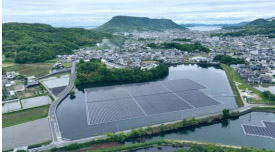
The Ministry of the Environment (MoE) has released a draft of its “Guidelines for Environmental Considerations in Solar Power Generation,” reinforcing the importance of aligning renewable energy expansion with biodiversity conservation.
Japan is currently pursuing two major policy goals: achieving carbon neutrality by 2050 and halting and reversing biodiversity loss by 2030 (“nature positive”). Against this backdrop, the new guidance highlights a critical challenge—ensuring that climate change mitigation efforts, such as solar deployment, do not come at the expense of natural ecosystems.
Solar power has expanded rapidly across Japan since the introduction of the feed-in tariff (FIT) scheme. However, concerns have also grown regarding environmental impacts, including soil erosion, water pollution, and the degradation of landscapes and ecosystems.
The new guidelines focus on mitigating impacts on animals, plants, and ecosystems, particularly for small- to medium-scale solar projects (10 kW and above) that are not subject to formal environmental impact assessments.
The document provides concrete measures across the entire project lifecycle—from site selection and design to construction, operation, and decommissioning—to help developers avoid or minimize ecological damage.
It emphasizes that solar development may lead to habitat loss and fragmentation, as well as disruption of wildlife movement corridors, and that changes in landform and vegetation can further degrade ecosystems.
At the same time, the guidelines highlight that well-designed projects can contribute positively to biodiversity. By preserving native vegetation, minimizing land alteration, reducing chemical use, and incorporating features such as biotopes, solar projects may help maintain or even enhance local ecosystems.
The guidance also underscores important business implications. Projects that fail to address environmental concerns may face community opposition, delays, or even cancellation, while those that incorporate environmental considerations are more likely to gain social acceptance, secure financing, and meet evolving requirements from corporate power purchasers.
The MoE also provides the Environmental Assessment Database System (EADAS), which allows users to check geographical characteristics on a map for environmental assessment purposes: https://eadas.env.go.jp/eiadb/ebidbs/ (available in Japanese)
A key message is the need to avoid environmentally sensitive areas—such as wetlands, natural forests, and other fragile ecosystems—and to minimize land modification and artificial ground coverage wherever development proceeds. By preserving the original characteristics of project sites and promoting coexistence with local ecosystems and communities, the guidelines point toward a more sustainable model for solar development in Japan.