
Japan Solar Update: No.223 (Oct 19 ~ 23, 2026)
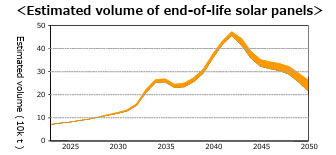
Japan is moving toward more systematic recycling of end-of-life photovoltaic (PV) panels as the country’s installed PV capacity continues to grow. In June 2026, legislation concerning the recycling of PV power generation equipment was promulgated, with the new framework scheduled to take effect within one year . The move is expected to accelerate efforts to establish appropriate systems for the collection, reuse, recycling, and resource recovery of used PV panels.
At a seminar on PV recycling held by the Japan Solar Energy Society at Waseda University on September 3–4, a wide range of initiatives were presented, covering panel dismantling and separation technologies, resource recovery and reuse, collection and processing systems, and the development of recycling businesses.
A key challenge in PV panel recycling is the efficient separation and recovery of the different materials contained in a panel. Glass accounts for around 60% of panel weight, while aluminum frames, silicon, copper, silver, and other materials can also be recovered. In particular, separating the encapsulant, typically ethylene-vinyl acetate (EVA), from the glass and solar cells is important for improving recycling efficiency and the quality of recovered materials. The seminar introduced thermal decomposition and other technologies for separating EVA, as well as potential uses of recovered EVA as fuel or material.
For glass, efforts are moving beyond simple crushing and processing into glass cullet toward so-called horizontal recycling, in which recovered PV glass is returned to glass manufacturing as a raw material. Achieving this requires the effective removal of encapsulant residues and other contaminants while maintaining the quality required for reuse.
Research is also progressing on the recovery of valuable metals such as silver and copper, as well as the recycling of silicon. As the volume of end-of-life PV panels is expected to increase, the challenge is shifting from simply treating used panels as waste to recovering their constituent materials efficiently and returning them to productive use.
Technology alone, however, will not establish a functioning recycling market. Efficient systems are needed to connect the collection and transportation of used panels from PV plants with inspection, reuse, dismantling, material separation, and resource recovery. The seminar also highlighted initiatives involving information platforms for the collection, reuse, and recycling of used PV panels, as well as efforts to improve the efficiency of collection and processing.
Accurately forecasting future volumes of end-of-life panels will also become increasingly important. Such forecasts need to take into account panel lifetimes, replacement cycles, and the potential for reuse. Life-cycle assessment (LCA) can also help evaluate the environmental benefits of recycling and resource recovery.
PV recycling has traditionally been discussed mainly from the perspective of appropriate waste treatment. Going forward, however, a broader resource-circulation perspective will become increasingly important. With the volume of end-of-life PV panels expected to rise from the 2030s onward, the development of business models that connect collection, dismantling and separation, resource recovery, and reuse will be essential.
For the long-term and sustainable expansion of photovoltaics, attention must extend beyond the installation and operation of PV systems to their entire life cycle, including what happens after the systems reach the end of their service life. Japan’s new regulatory framework could provide an important impetus for transforming PV panels from materials to be disposed of into resources that can be recovered and used again.