
Japan Solar Update: No.209 (July 13 ~ July 17, 2026)
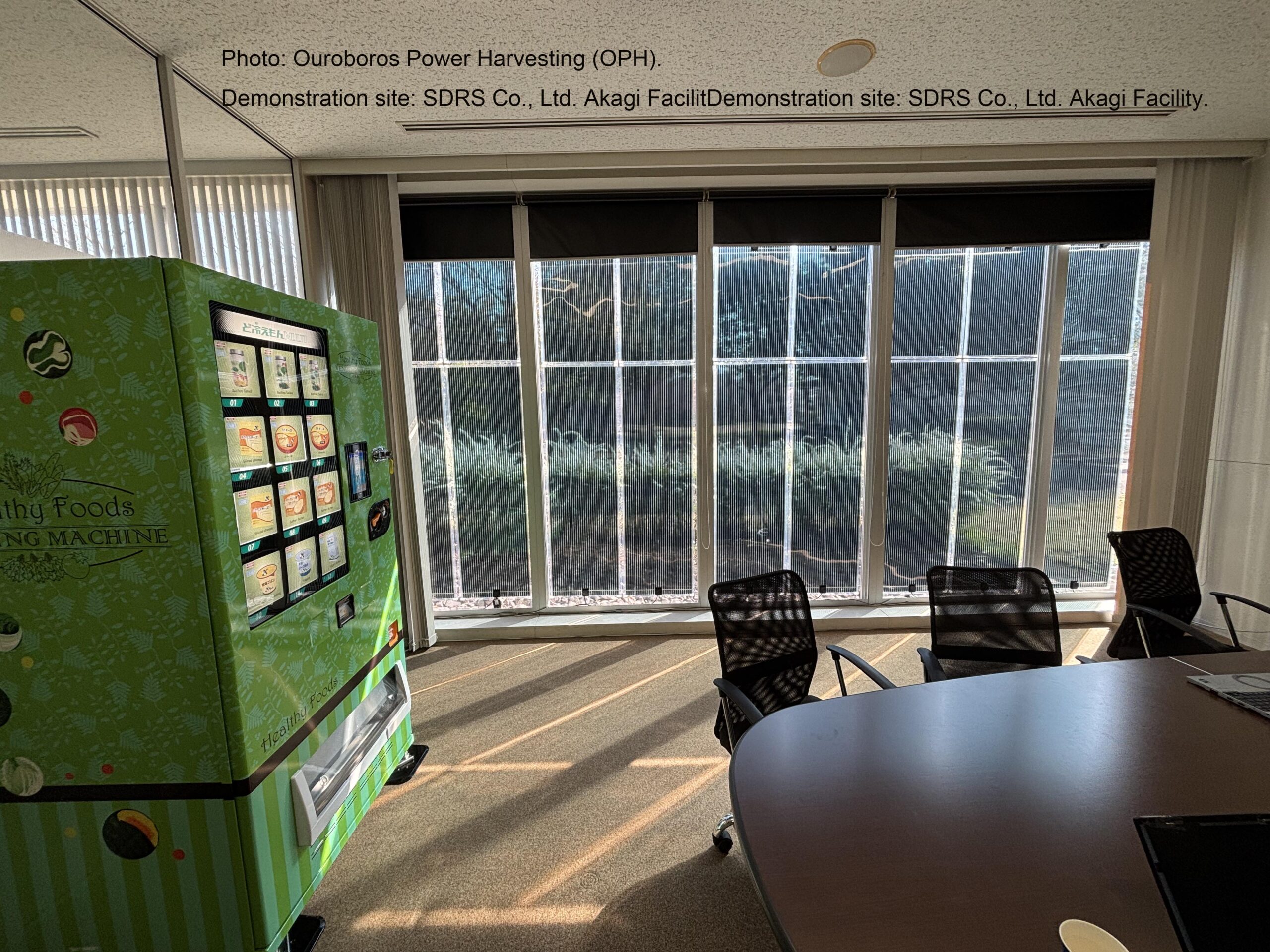
The future growth of solar energy will depend not only on improving photovoltaic efficiency but also on expanding where solar power can be deployed. While rooftop solar systems will continue to play a significant role in the global energy transition, large areas of the built environment remain untapped. Semi-transparent organic photovoltaics (ST-OPV) are emerging as a technology that could unlock these new opportunities by enabling windows and glass facades to generate electricity while maintaining transparency.
OPH Advances the Commercialization of ST-OPV in Japan
One company helping bring this technology closer to commercialization is Ouroboros Power Harvesting (OPH), a joint venture established by GSI Creos Corporation and Brazil-based Power Harvesting Dynamics Semiconductors Impressos LTDA (PHD). OPH plans to begin domestic production of ST-OPV in Japan in fiscal 2029, supporting the wider adoption of transparent photovoltaic technology for Building-Integrated Photovoltaics (BIPV).
Unlike conventional photovoltaic technologies, ST-OPV is designed to complement rather than replace existing solar solutions. Crystalline silicon solar modules remain the preferred option for rooftops where maximum energy generation is required, while perovskite solar cells are expected to expand opportunities for lightweight and flexible applications. ST-OPV addresses a different market by enabling electricity generation on transparent building elements such as windows, glass facades, skylights, atriums, and greenhouses.
Expanding the Scope of Building-Integrated Photovoltaics
Modern commercial buildings often feature extensive glass exteriors that currently contribute little to renewable energy generation. By integrating photovoltaic functionality into these surfaces, ST-OPV has the potential to significantly expand the total area available for solar deployment, particularly in dense urban environments where rooftop space is limited.
Beyond generating electricity, semi-transparent organic photovoltaic films can also reduce solar heat gain while maintaining natural daylight, helping lower cooling demand in buildings with large glass facades. This combination of renewable energy generation and improved energy efficiency supports the development of Net Zero Buildings (NZBs).
The lightweight nature of organic photovoltaic films also makes the technology attractive for retrofit projects. Because the material adds minimal structural load, existing commercial buildings may be upgraded without extensive reinforcement, an important advantage as countries accelerate building decarbonization.
Creating a Complementary Market for Solar
Like other emerging photovoltaic technologies, ST-OPV still faces challenges, including improvements in power conversion efficiency, long-term durability, manufacturing scale, and cost competitiveness. Wider adoption will also depend on the development of installation standards and construction industry supply chains.
Despite these challenges, ST-OPV represents an opportunity to expand, rather than replace, today’s solar market. Instead of competing directly with rooftop silicon systems or emerging perovskite technologies, transparent organic photovoltaics could establish a complementary market by enabling entirely new building surfaces to generate renewable electricity.

Demonstration site: SDRS Co., Ltd. Akagi Facility. Photo courtesy of Ouroboros Power Harvesting (OPH)
If commercialization progresses successfully, ST-OPV could become an important addition to the BIPV sector, helping transform windows and glass facades into active energy-producing infrastructure while supporting more sustainable and energy-efficient cities.