
Japan Solar Update: No.215 (Aug 24 ~ 28, 2026)
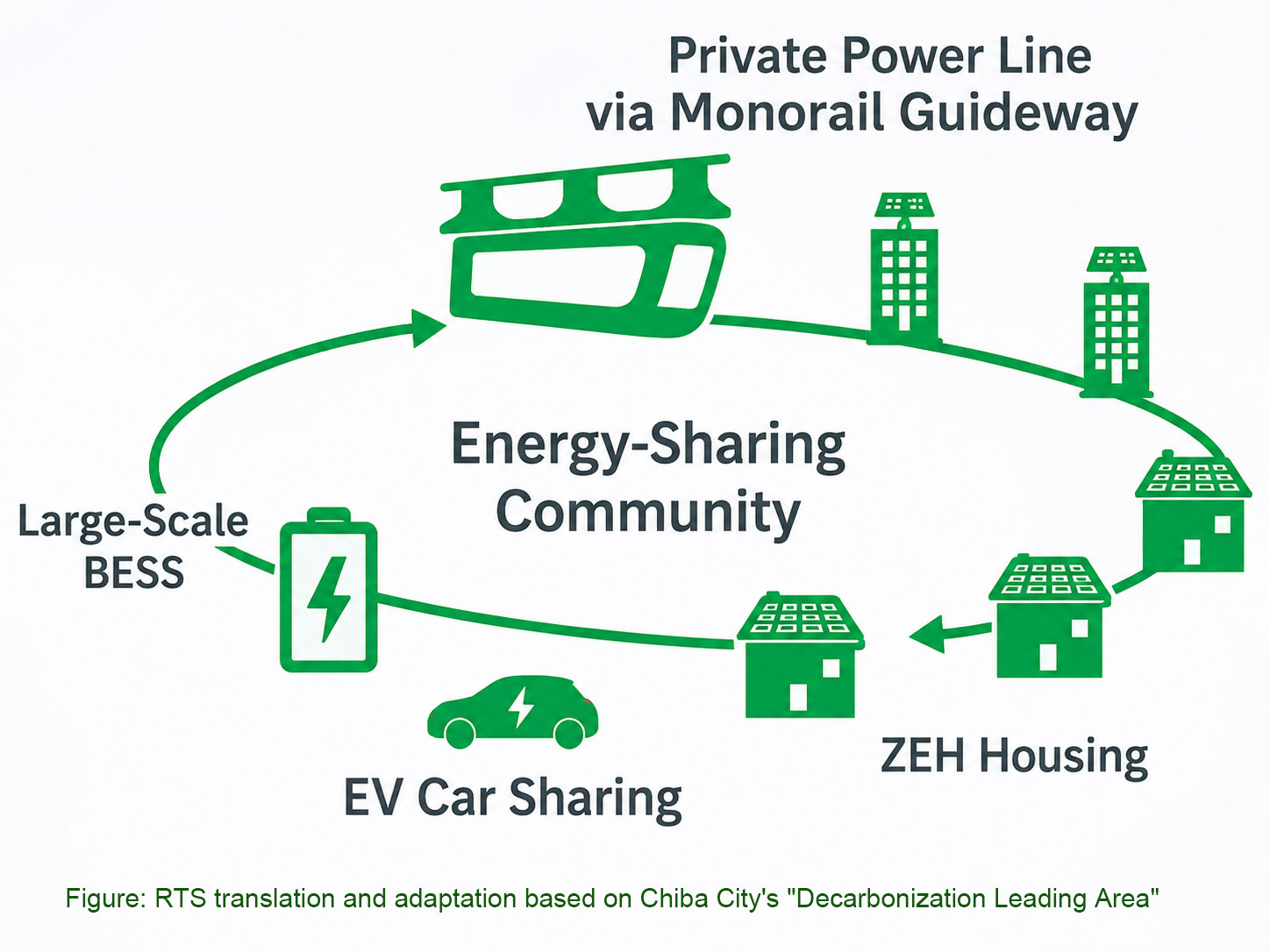
A new microgrid-based residential community is being developed in Chiba City, Chiba Prefecture, one of Japan’s Decarbonization Leading Areas designated by the Ministry of the Environment. The project is being undertaken by Daito Trust Construction Co., Ltd. and aims to create a resilient, low-carbon community by integrating net-zero energy houses (ZEH), large-scale battery energy storage systems (BESS), an energy management system (EMS), and private power lines into a community-scale microgrid.
The development will include more than 330 ZEH homes. To optimize energy use across the community, a 7 MWh battery energy storage system and an EMS will coordinate electricity generation, storage, and consumption, enabling renewable electricity to be used more efficiently throughout the neighborhood.
A key feature of the project is the installation of private power transmission lines utilizing the guideway structure of the Chiba Urban Monorail. These dedicated power lines will connect homes and shared energy infrastructure, allowing electricity to be shared efficiently within the ZEH residential area. The microgrid will also be capable of operating independently from the main utility grid during large-scale power outages, ensuring that electricity supply can be maintained within the community through islanded operation.
The project goes beyond creating an energy-sharing residential district. By integrating the ZEH housing area with surrounding facilities, including Chiba Zoological Park and monorail stations, Chiba City aims to establish a comprehensive urban decarbonization model that combines residential, transportation, and public infrastructure into a single low-carbon energy system. The city also plans to replicate this model in other districts to encourage population growth and make Chiba a more attractive place to live.
The project demonstrates how residential developments can move beyond installing individual solar PV systems and battery storage by integrating them into a coordinated local energy network. By combining ZEH housing, large-scale battery storage, private power distribution lines, and intelligent energy management within a community microgrid, Chiba City is creating a practical model for resilient, low-carbon urban development that could serve as a blueprint for other municipalities in Japan.