
Japan Solar Update: No.216 (Aug 31 ~ Sept 4, 2026)
The Japanese government has enacted a revision to the Electricity Business Act to strengthen electricity supply stability and energy security in response to increasing power demand driven by digital transformation (DX) and green transformation (GX).
The revision introduces measures to accelerate the development of large-scale power transmission networks and power generation facilities. Under the new framework, the Minister of Economy, Trade and Industry (METI) will certify important infrastructure development plans, while the Organization for Cross-regional Coordination of Transmission Operators, JAPAN (OCCTO) will provide financing through loans utilizing public funds.
Strengthening grid infrastructure is becoming increasingly important as Japan expands renewable energy deployment. The enhancement of transmission networks is expected to support the integration of variable renewable energy sources, including solar PV, and create a more favorable environment for grid-scale battery energy storage systems (BESS), which are expected to play a growing role in balancing electricity supply and demand.
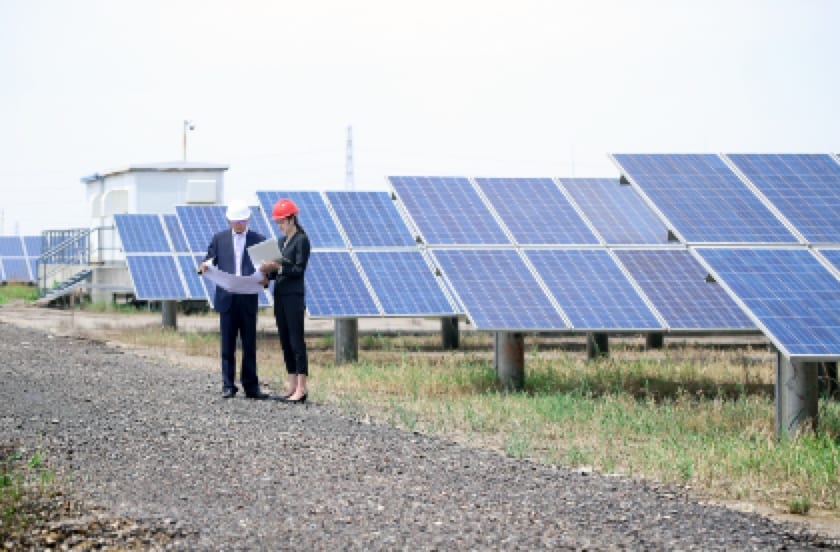
The revised Act also introduces new measures to improve the safety of solar PV power generation facilities. In recent years, damage to PV mounting structures and support systems caused by severe weather events has highlighted the need for improved design and construction quality.
Under the new requirements, certain solar PV facilities will be subject to technical compliance assessments by registered third-party organizations before construction of support structures begins. This measure aims to ensure that facilities meet technical standards at the design stage and prevent accidents.
In addition, manufacturers and construction companies may be required to cooperate in investigations and corrective actions when product defects or construction-related issues are identified. As the solar PV market continues to expand, quality management across the entire value chain—from manufacturers and EPC companies to project developers—will become increasingly important.
The revision does not introduce new installation standards or additional regulations specifically targeting grid-scale BESS or residential battery storage systems. However, improvements in grid infrastructure and power system flexibility are expected to support the wider adoption of energy storage technologies in Japan.
The revised Electricity Business Act represents an important step toward achieving both renewable energy expansion and a stable electricity supply. While solar PV projects will face increasing requirements for safety and reliability, the development of a more flexible power system is expected to create new opportunities for the battery storage market. Detailed implementation rules following the revision will be important developments to watch.