
Japan Solar Update: No.224 (Oct 26 ~ 30, 2026)
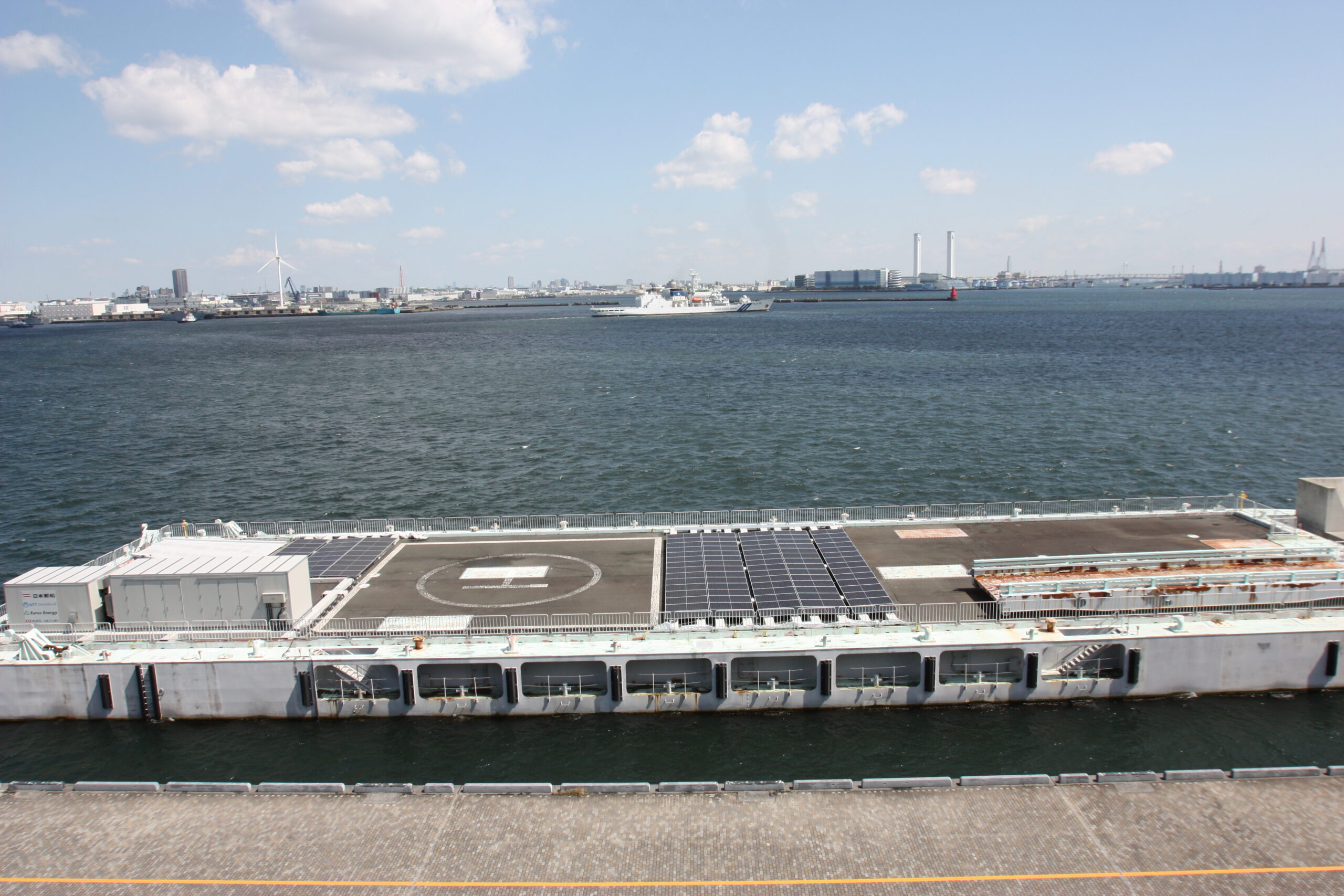
A demonstration project for an offshore floating data center began operations at Osanbashi Pier in Yokohama Port on March 25, 2026.
The project follows an earlier initiative introduced in our previous PV Blog(https://www.rts-pv.com/en/blogs/14034/), which explored the potential of offshore floating data centers powered by renewable energy.
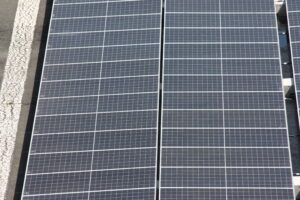
The demonstration facility is installed on a disaster-response mini-float measuring 25 m by 80 m and consists of a container-type data center, a 44 kW solar power generation system, and a 358 kWh battery energy storage system. The facility is designed to operate entirely on renewable energy.
<Solar PV System for the Offshore Data Center Demonstration 1 >
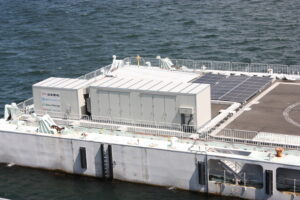

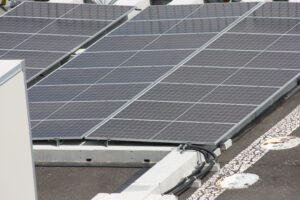
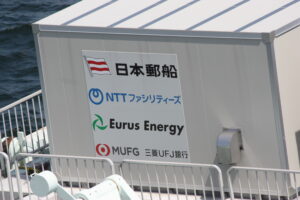
The project is testing the feasibility of operating a data center in a marine environment, including the effects of salt damage and vibration on the equipment, as well as the stability of renewable energy supply. NYK Line is coordinating the overall project, while NTT FACILITIES is responsible for the construction and operation of the data center and Eurus Energy Holdings is conducting technical verification related to renewable energy operations. The demonstration is scheduled to continue through fiscal 2026, with the partners aiming for practical application.
<Solar PV System for the Offshore Data Center Demonstration 2 >
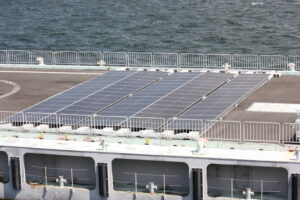
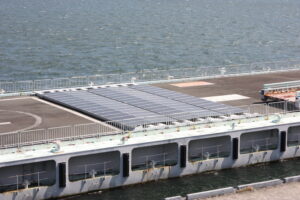
The combination of solar power generation and battery storage is an important aspect of the demonstration. A data center requires a stable electricity supply, while solar power generation fluctuates depending on weather and other conditions. The battery system can therefore help absorb fluctuations in solar power generation and support stable operation of the facility. The project provides an opportunity to examine how renewable energy and battery storage can be integrated with digital infrastructure in an offshore environment.
The project is also moving toward potential applications beyond the current demonstration. In September 2026, the participating companies announced a concept for a “port-based offshore data center,” in which a floating data center would be moored alongside a quay in a port area. Such an approach could make use of existing port infrastructure while enabling data centers to be deployed in locations where suitable land is limited.
<Solar PV System for the Offshore Data Center Demonstration >
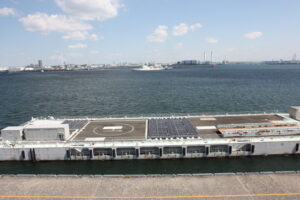
Floating solar power generation has already been expanding globally, with cumulative installations exceeding 10 GW. Applications in nearshore and offshore environments are also progressing, including projects at the scale of several tens of megawatts. For Japan, which is surrounded by the sea and faces constraints on available land, marine spaces could provide new opportunities for renewable energy and related infrastructure.
The results of the Yokohama demonstration will be important in assessing the potential of combining solar power generation, battery storage and floating infrastructure for future offshore and port-based data centers. The project could also offer valuable insights into new applications for renewable energy in Japan’s coastal areas.
Location: Osanbashi Pier, Yokohama Port, 1-1 Kaigandori, Naka-ku, Yokohama, Kanagawa, Japan
Solar PV Capacity: 44 kW
Start of Operation: March 25, 2026