
Japan Solar Update: No.207 (June 29 ~ July 3, 2026)
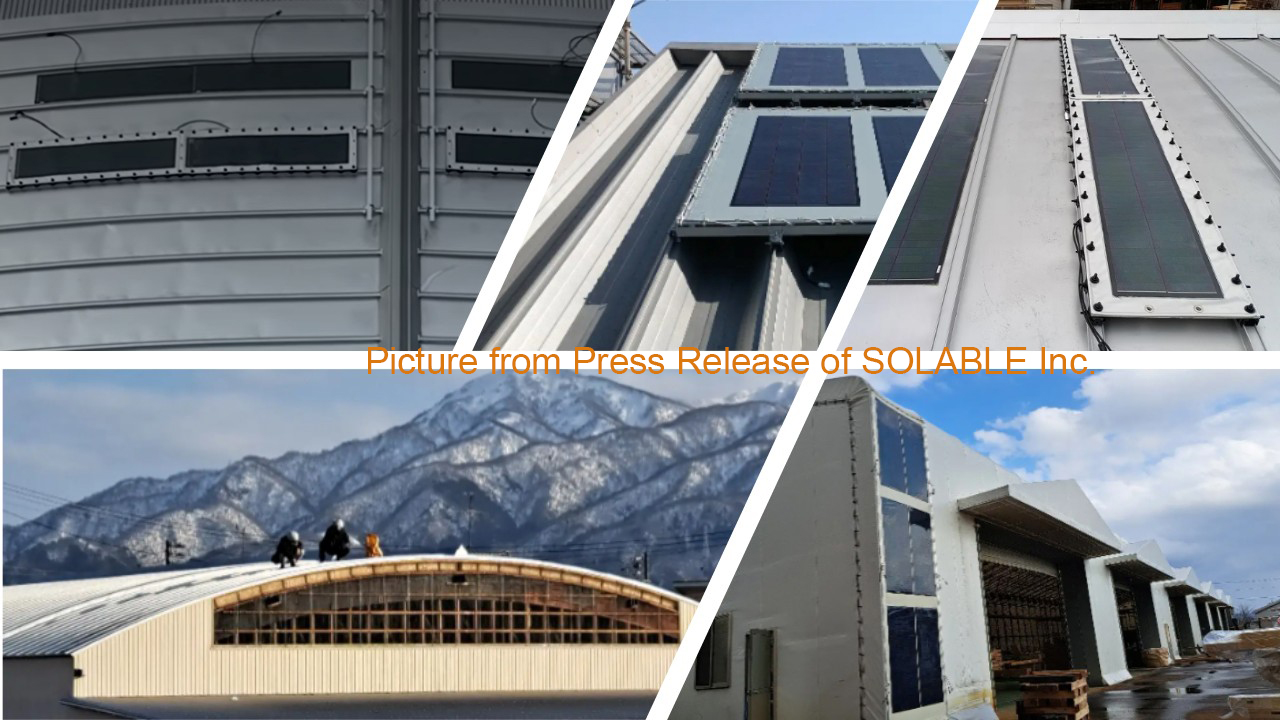
A new demonstration project featuring next-generation chalcopyrite solar cells has begun in Agano City, Niigata Prefecture. Led by SOLABLE, the project uses lightweight photovoltaic (PV) modules developed by PXP and has been installed at facilities owned by Sakazume Seizaisho, a SOLABLE group company. The demonstration officially began on April 9, following the start of system operation on March 24.
The project aims to evaluate the performance, durability, and installation feasibility of chalcopyrite solar cells under the harsh winter conditions of Niigata, including heavy snowfall and sunlight reflected from snow-covered surfaces.
Chalcopyrite solar modules are attracting attention because they weigh only about one-tenth as much as conventional crystalline silicon panels. Their lightweight design could significantly expand installation opportunities for buildings and structures that cannot easily support traditional PV systems due to weight limitations.
To assess their performance in real-world applications, modules of different sizes have been installed on the roofs and exterior walls of three buildings at the sawmill site using several mounting methods. These include direct attachment and sheet-based installation techniques designed to improve construction efficiency and suitability for snowy environments.
At a tent-style building, 12 modules measuring approximately 1.6 meters by 0.7 meters, with a combined capacity of about 1.5 kW, were installed on the roof and walls. Another 16 modules of the same size, totaling roughly 2 kW, were mounted on the folded-plate roof of a precut processing factory. In addition, eight larger modules measuring approximately 3 meters by 0.4 meters, with a combined capacity of around 1 kW, were installed on an arched “kamaboko-style” roof.
The electricity generated by the systems will primarily be used for on-site consumption, including indoor lighting, while a portion may also be stored in battery systems for further evaluation.
A key objective of the demonstration is to compare different installation methods for lightweight PV modules and assess their construction efficiency, durability, and suitability for snowy climates. Researchers will also monitor how weather conditions affect electricity generation and compare the performance of chalcopyrite modules with that of conventional solar technologies.